Hello friends,
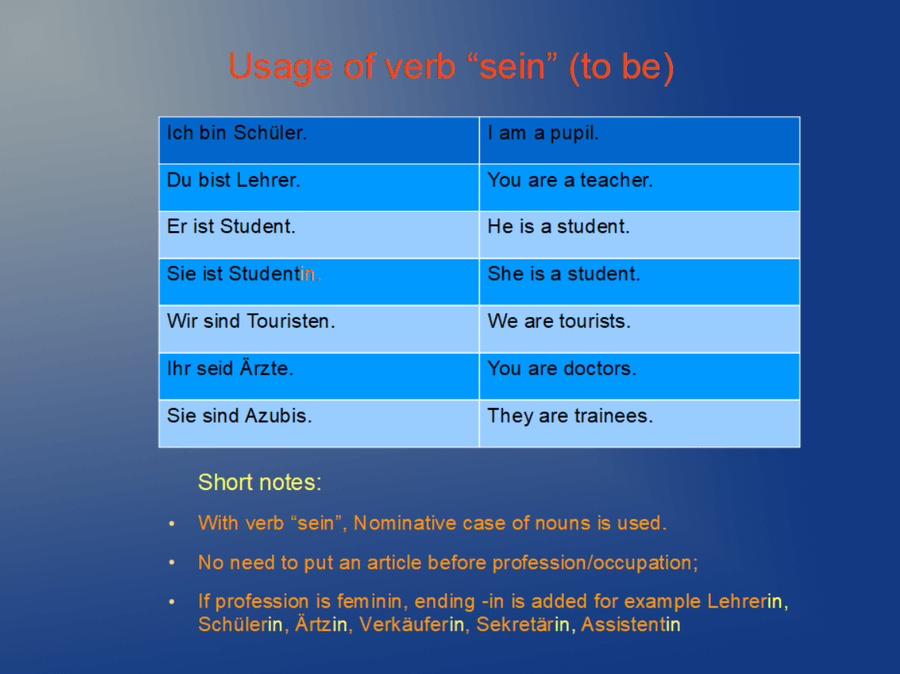
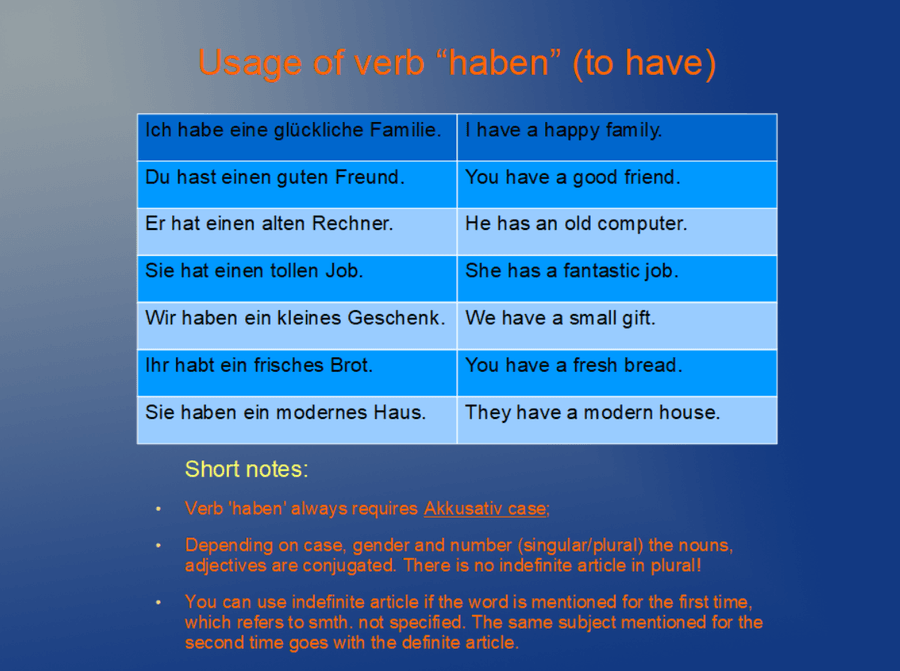
German language progress I wish to all of you. Today I have prepared short presentation regarding practical usage of verbs “haben” – to have and “sein” – to be. At the end of presentation common expressions with both verbs would be solid addition to your practical skills.
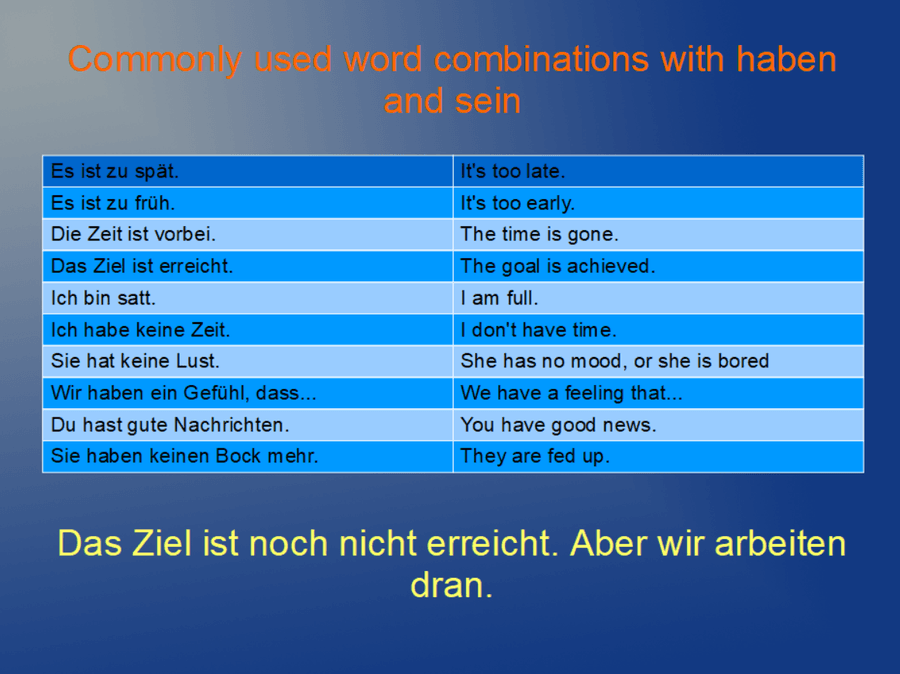
The list of expressions is tiny, however it is highly important from the beginning to practice few expressions in the specific context to memorize them rather than learn 1000 words without practical backgraound.
Finally, I give you a context (dialogue) when they could be utilized.
1st person: Es ist zu spät, wir müssen nach Hause gehen.
2nd person: Lass das. Wir müssen noch eine Stunde hier bleiben. Unser Ziel ist nicht erreicht.
1st person: Ich habe keine Zeit mehr. Meine Eltern warten auf mich. Wenn du willst, mache es selbst.
2nd person: Ich habe das Gefühl, dass du gar keine Lust darauf hast. In diesem Fall versuche ich diese Aufgabe auf eigene Faust zu erledigen.
1st person: Hättest du gute oder schlechte Nachrichten, gib mir jedenfalls Bescheid.
2nd person: Wird gemacht. Bis zum nächsten Mal. Mache es gut, tschüss
1st person: Tschüss und schönen Abend noch.
That’s all for today, friends. Genießt Ihren Tag und wir bleiben im Kontakt.